
- Home
- Shop
Kratom by Effect
Kratom by Color
Other Products

JUST ARRIVED!!
- FAQs
- Blog
- Useful Info
Kratom by Symptom

Kill the pain, not the patient
The documentary takes a deep dive into the benefits, dangers and lingering questions around kratom leaf as an alternative to opioid painkillers.”
– A FILM BY CHRIS BELL
- Testimonials
- Contact
- Home
- Shop
Kratom by Effect
Kratom by Color
Other Products
JUST ARRIVED!!
- FAQs
- Blog
- Useful Info
Kratom by Symptom
Kill the pain, not the patient
The documentary takes a deep dive into the benefits, dangers and lingering questions around kratom leaf as an alternative to opioid painkillers.”
– A FILM BY CHRIS BELL
- Testimonials
- Contact
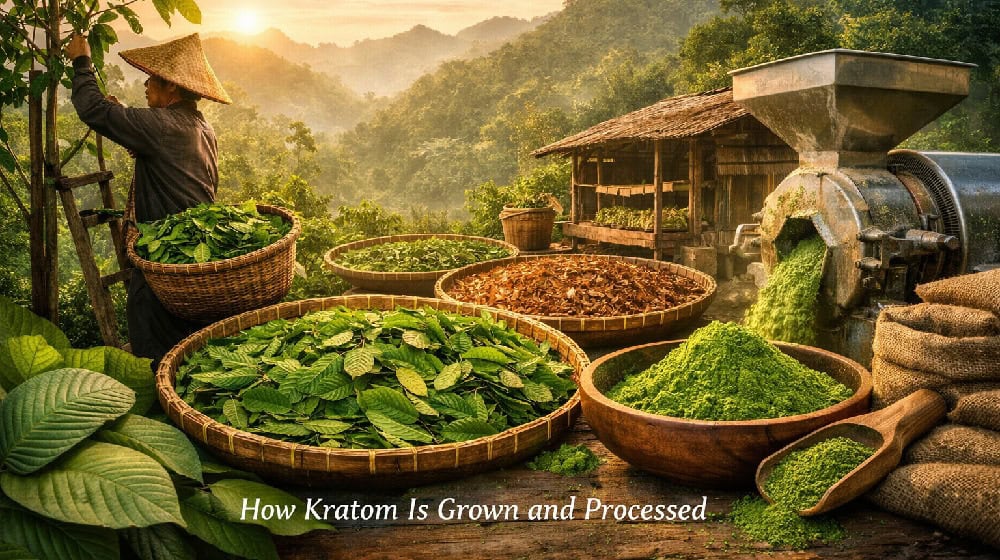
How Kratom Is Grown and Processed
From Tropical Tree to Powder
Kratom begins its journey long before it reaches online stores in South Africa. Grown in the humid, tropical regions of Southeast Asia, kratom comes from the leaves of the Mitragyna speciosa tree – a tall evergreen native to countries such as Indonesia, Thailand, and Malaysia.
Understanding how kratom is cultivated, harvested, and processed helps consumers make more informed decisions when buying kratom online. From leaf selection to drying techniques, every step plays a role in the final product.
The Natural Growing Environment
Kratom trees thrive in hot, humid climates with rich, fertile soil. These trees can grow over 20 metres tall when left to mature naturally. Most kratom farms are located in rural areas where rainfall is consistent and temperatures remain warm throughout the year.
Unlike many commercial crops, kratom is often grown using traditional agricultural methods. Many farmers cultivate trees on small plots of land, sometimes intercropping with other tropical plants. Because the tree flourishes in natural rainforest conditions, minimal chemical intervention is typically required.
Tree age matters as well. Mature trees produce larger leaves with a more developed alkaloid profile. Farmers carefully monitor growth stages to determine the best time for harvesting.
Harvesting the Leaves
Harvesting is done by hand. Skilled workers climb trees or use long cutting tools to remove mature leaves without damaging the plant. This allows the tree to continue producing new growth.
Leaf maturity affects colour classification later in processing. Younger leaves are often used for white varieties, mid-maturity leaves for green varieties, and fully mature leaves for red types. The harvesting stage plays an important role in determining how the final batch will be categorised.
Fresh leaves are typically transported quickly to a processing facility to preserve quality.
Washing and Sorting
Once harvested, leaves are cleaned to remove dust and debris. They are then sorted according to size, maturity, and condition. This stage ensures that only suitable leaves move forward in production.
Quality control begins here. Damaged or discoloured leaves are removed before drying begins.
Drying Methods
Drying is one of the most critical steps in kratom processing. It influences colour, aroma, and overall consistency.
There are several drying methods:
Indoor Drying
Leaves are laid out on racks inside controlled environments. This allows for consistent airflow and protection from direct sunlight.
Sun Drying
Leaves are placed outdoors in natural sunlight. This traditional method is still widely used in tropical regions.
Combined or Fermented Drying
For certain red and gold varieties, leaves may undergo longer drying periods or controlled fermentation. This process alters the colour and characteristics of the powder once ground.
Drying can take several days depending on climate and technique. Proper moisture reduction is essential before milling begins.
Grinding Into Powder
Once fully dried, the leaves are crushed and milled into a fine powder. Modern processing facilities use industrial grinders to create a consistent texture suitable for packaging.
The powder is then sieved to ensure uniform particle size. Consistency is important for both presentation and storage stability.
At this stage, batches may be blended to achieve specific strain profiles or colour classifications.
Quality Control and Packaging
Before export, reputable suppliers conduct additional checks. These may include:
- Moisture content testing
- Visual inspection
- Batch tracking
- Basic contaminant screening
Proper packaging is essential to maintain freshness. Kratom powder is sealed in moisture-resistant bags before distribution.
For customers purchasing kratom online in South Africa, understanding this process adds transparency to the buying decision. Products imported from reputable farms and processing facilities are handled with care from cultivation through to packaging.
From Southeast Asia to South Africa
After processing, kratom is exported internationally. Importers and online stores in South Africa source their products from established suppliers who follow consistent harvesting and drying practices.
When buying kratom online in SA, consumers often focus on strain names. However, much of the variation between red, green, white, and gold varieties is influenced by harvesting stage and drying technique rather than entirely different plant species.
Knowing how kratom is grown and processed helps customers understand that quality begins at the source – in the tropical regions where the trees naturally thrive.
Why Understanding the Process Matters
The journey from tree to powder involves multiple careful steps:
Cultivation in tropical climates
- Hand-harvesting of mature leaves
- Cleaning and sorting
- Controlled drying
- Fine milling
- Secure packaging
Each stage contributes to the consistency and appearance of the final product.