
- Home
- Shop
Kratom by Effect
Kratom by Color
Other Products

JUST ARRIVED!!
- FAQs
- Blog
- Useful Info
Kratom by Symptom

Kill the pain, not the patient
The documentary takes a deep dive into the benefits, dangers and lingering questions around kratom leaf as an alternative to opioid painkillers.”
– A FILM BY CHRIS BELL
- Testimonials
- Contact
- Home
- Shop
Kratom by Effect
Kratom by Color
Other Products
JUST ARRIVED!!
- FAQs
- Blog
- Useful Info
Kratom by Symptom
Kill the pain, not the patient
The documentary takes a deep dive into the benefits, dangers and lingering questions around kratom leaf as an alternative to opioid painkillers.”
– A FILM BY CHRIS BELL
- Testimonials
- Contact
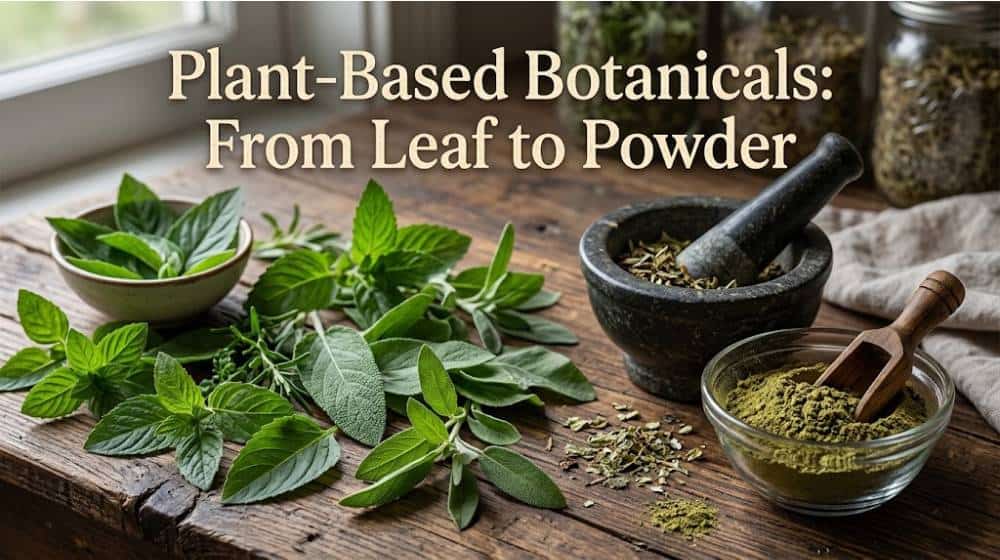
Plant-Based Botanicals: From Leaf to Powder
Plant-Based Botanicals: From Leaf to Powder
Plants have been part of human life for thousands of years, providing food, materials and ingredients used in traditional botanical practices. From fragrant garden herbs to dried leaves and finely ground plant powders, the natural world offers an enormous variety of botanical materials, each with its own characteristics.
But what happens between harvesting a plant and turning it into a dried or powdered product? The process is more interesting than you might think.
The Many Forms of Plant-Based Botanicals
Botanical products can be made from different parts of a plant, including leaves, roots, flowers, seeds and bark. The part used depends on the plant itself and the intended application.
Leaves are particularly common because they can be collected, dried and processed into different forms. Some botanical products retain their whole-leaf appearance, while others are cut into smaller pieces or ground into a fine powder.
These differences affect texture, appearance and how easily a product can be handled or measured. Although two products may originate from the same plant, their finished forms can look quite different.
From Fresh Leaves to Dried Herbs
Drying is an important step in preparing many botanical materials. Freshly harvested leaves contain moisture, which can contribute to deterioration if they are not handled appropriately.
Depending on the plant and the intended product, leaves may be dried under controlled conditions to reduce moisture while preserving their characteristic colour and physical properties.
Proper handling matters throughout this process. Clean equipment, suitable drying conditions and protection from excessive moisture help maintain product quality. Once dried, botanical materials also need appropriate storage to protect them from humidity, contamination and other environmental factors.
Why Are Some Leaves Crushed or Ground into Powder?
The physical form of a botanical product often comes down to processing and practical use.
Whole dried leaves retain much of their original structure. Crushed leaves consist of smaller pieces, while powdered botanicals have been processed into a finer consistency.
Grinding increases the surface area of the material and creates a more uniform texture. However, a finer powder does not automatically mean a product is purer, more potent or better quality. Those characteristics depend on the plant, its preparation and the quality controls used during processing.
Understanding these differences helps people make more informed decisions when comparing botanical products.
What Determines the Quality of a Botanical Product?
Appearance is only one part of the picture. The quality of a dried herb or plant powder can depend on several factors, including the original plant material, harvesting methods, drying conditions, processing practices and storage.
Botanical identification is particularly important because different plants can sometimes look similar. Reliable sourcing and appropriate quality checks help establish what a product contains and whether it has been handled properly.
Packaging also plays a role. Containers that protect dried materials from moisture, excessive heat and direct sunlight can help preserve their condition during storage.
The Growing Interest in Plant-Based Products
Interest in botanical products reflects a long-standing relationship between people and the natural world. From culinary herbs and aromatic plants to traditional botanical ingredients, plant materials continue to attract attention for their variety and cultural significance.
Kratom is one example of a botanical product derived from the leaves of a tropical tree native to Southeast Asia. Like other dried-leaf products, it illustrates how plant materials can be prepared and presented in different physical forms.
Learning about the journey from leaf to powder provides a broader understanding of botanical products and the importance of careful sourcing, processing and storage.
Ultimately, the plant itself is only the beginning. How its leaves are harvested, prepared and preserved plays an important role in the quality of the finished botanical material.